








Written By Dr Kurtis Irwin, CEO Green Emissions Testing
This sixth and final article concludes our 6-part series, Overcoming Barriers: Confidence in Catalyst Durability, exploring how OEMs and technology partners can move from testing challenges to proven performance.
Throughout this series, we have examined why durability matters, the challenges of predicting catalyst lifetime, the limitations of conventional testing methods, the technologies enabling representative ageing, and the expertise required to translate data into confident engineering decisions. As industries transition towards hydrogen, renewable fuels, and increasingly complex operating environments, the next challenge is clear: ensuring durability testing evolves alongside the technologies it is designed to support. In this final blog, we explore the future of catalyst durability testing and the role it will play in enabling the next generation of industrial, energy, and emissions-control technologies.
Executive Summary
As industries transition toward low-carbon fuels, renewable feedstocks, and net-zero processes, catalysts face new, more complex operating environments. Their durability will define the success or failure of decarbonisation strategies. In this blog, we look to the future of catalyst ageing: why durability testing must evolve, how next-generation processes amplify the challenge, and how CATAGEN Green Emissions Testing (G.E.T) is enabling the confidence needed for a decarbonised world.
Durability at the heart of the energy transition
The drive toward decarbonisation is reshaping industrial chemistry:
- – Low-carbon fuels and bio-feedstocks introduce new impurities and fluctuating compositions that existing catalysts were never designed for.
- – Hydrogen production and utilisation demand catalysts that tolerate extreme redox cycling and dynamic loads in electrolyser reformers, SOFCs, and ammonia synthesis loops.
- – Carbon capture and utilisation (CCU) processes bring new catalysts into service, but their long-term stability under high CO₂ partial pressures remains uncharted.
- – Electrified reactors and intermittent energy inputs create more transient thermal and chemical environments than ever before.
These next-generation processes demand unprecedented durability, but they also bring greater uncertainty. Predicting how catalysts will behave after thousands of hours in these conditions is now a critical challenge for technology providers, operators, and asset owners.
Why traditional testing cannot keep pace
The increasing complexity of future energy and industrial processes is exposing the limitations of conventional catalyst testing approaches. Pilot plant programmes are often too slow and costly to support the rapid development cycles required for emerging low-carbon technologies, while lab-scale testing can struggle to replicate the highly dynamic operating conditions created by variable renewable power, fluctuating bio-derived feedstocks, and evolving contaminant profiles. At the same time, feedstock variability associated with waste-derived fuels, hydrogen blends, and CO₂ rich process streams is introducing new degradation mechanisms and deactivation pathways that many conventional catalyst systems were never designed to withstand. As a result, catalyst durability is increasingly becoming a critical factor in technology deployment. Without representative ageing methodologies and predictive durability data, the commercialisation of new technologies becomes more uncertain, increasing risk and potentially slowing the pace of innovation and adoption.
Durability testing for the next era
Future-ready durability testing must:
- – Replicate real-world conditions – from hydrogen-rich feeds and CO₂ utilisation streams to bio-oil contaminants and load-following regimes.
- – Combine industrial realism with laboratory precision – capturing transients, poisons, and cycling profiles with repeatability.
- – Generate actionable insights rapidly – accelerating catalyst development without months of pilot plant campaigns.
- – Support predictive digital models – feeding high-quality time-on-stream data into lifetime prediction algorithms for future process simulation.
This is why durability testing is no longer just a validation step it’s becoming a strategic enabler of technologies.
CATAGEN’s role in shaping the future
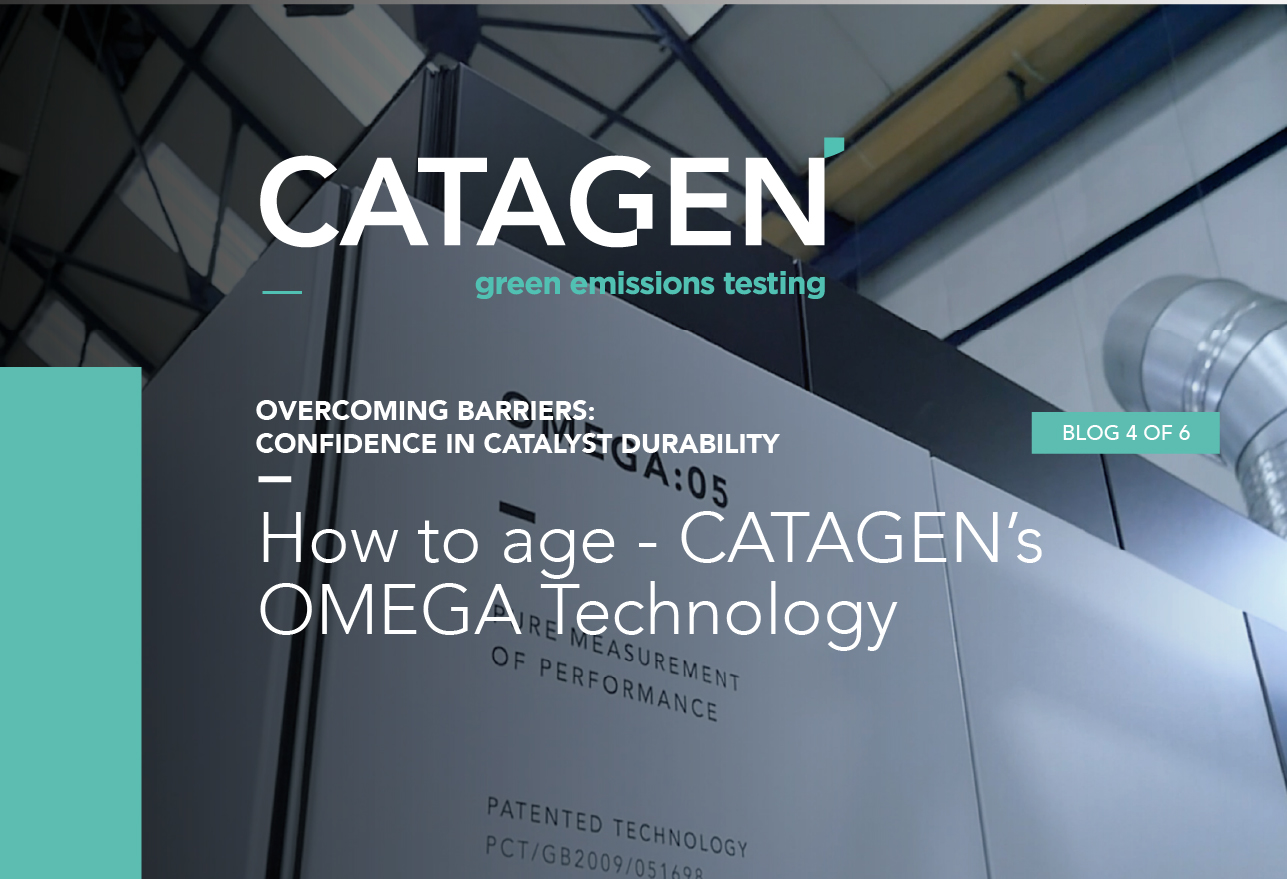
CATAGEN G.E.T has already transformed the catalyst ageing landscape with innovations like the OMEGA Reactor, capable of simulating industrial stressors thermal cycling, contamination, fluctuating syngas compositions under precise control.
These innovations give process owners and technology developers the confidence to deploy solutions at scale, knowing durability risks are understood and mitigated.
Why durability confidence will define the decarbonised future
As industries continue to transition towards lower-carbon processes, confidence in catalyst durability is becoming a key competitive differentiator. Catalyst suppliers that can demonstrate and validate long-term performance under alternative fuels and emerging process routes will be better positioned to support the next generation of technologies. Operators with a clear understanding of catalyst degradation mechanisms can optimise maintenance strategies, minimise operating costs, and maximise uptime, while technology providers that address durability early in the development cycle can accelerate commercial adoption and reduce investment risk. Without predictive durability testing, many decarbonisation technologies risk remaining trapped in an uncertainty gap, too risky to scale and too expensive to deploy with confidence. With representative ageing data and validated lifetime models, innovation can move forward faster, more efficiently, and with greater certainty.
A call to lead with confidence
The future of catalyst durability testing will be defined by greater complexity, but also greater opportunity. As hydrogen adoption grows, alternative feedstocks become more common, and industrial processes continue to decarbonise, the ability to understand and predict long-term catalyst performance will become increasingly important.
Success will depend on more than simply generating durability data. It will require representative testing methodologies, deeper mechanistic understanding, predictive lifetime models, and the expertise to translate results into informed engineering decisions. Organisations that can confidently validate catalyst performance under real-world operating conditions will be better positioned to accelerate innovation, reduce risk, and bring new technologies to market.
Ultimately, confidence in catalyst durability is not just about understanding how a catalyst performs today. It is about understanding how it will perform throughout its operational lifetime. As the demands on catalysts continue to evolve, CATAGEN Green Emissions Testing remains committed to helping partners generate the insight, evidence, and confidence needed to meet the challenges of tomorrow.



Supporting our partners obtain certification with
Queen’s Road, Titanic Quarter,
Belfast, N. Ireland BT3 9DT
Tel: +44(0)2890455100
Follow us: