







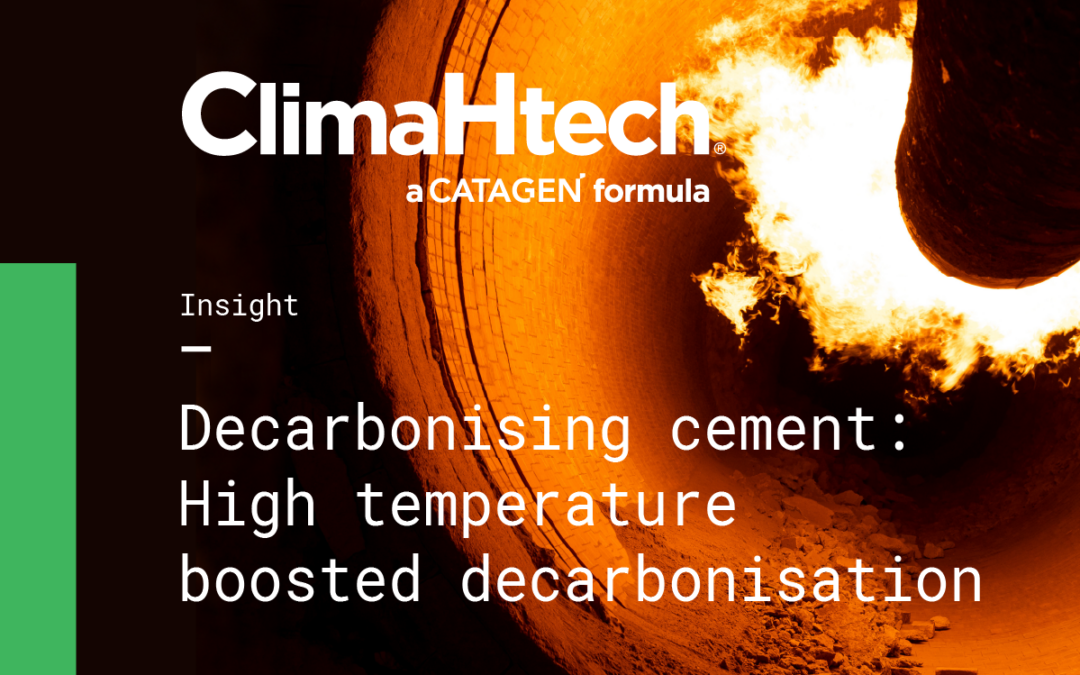
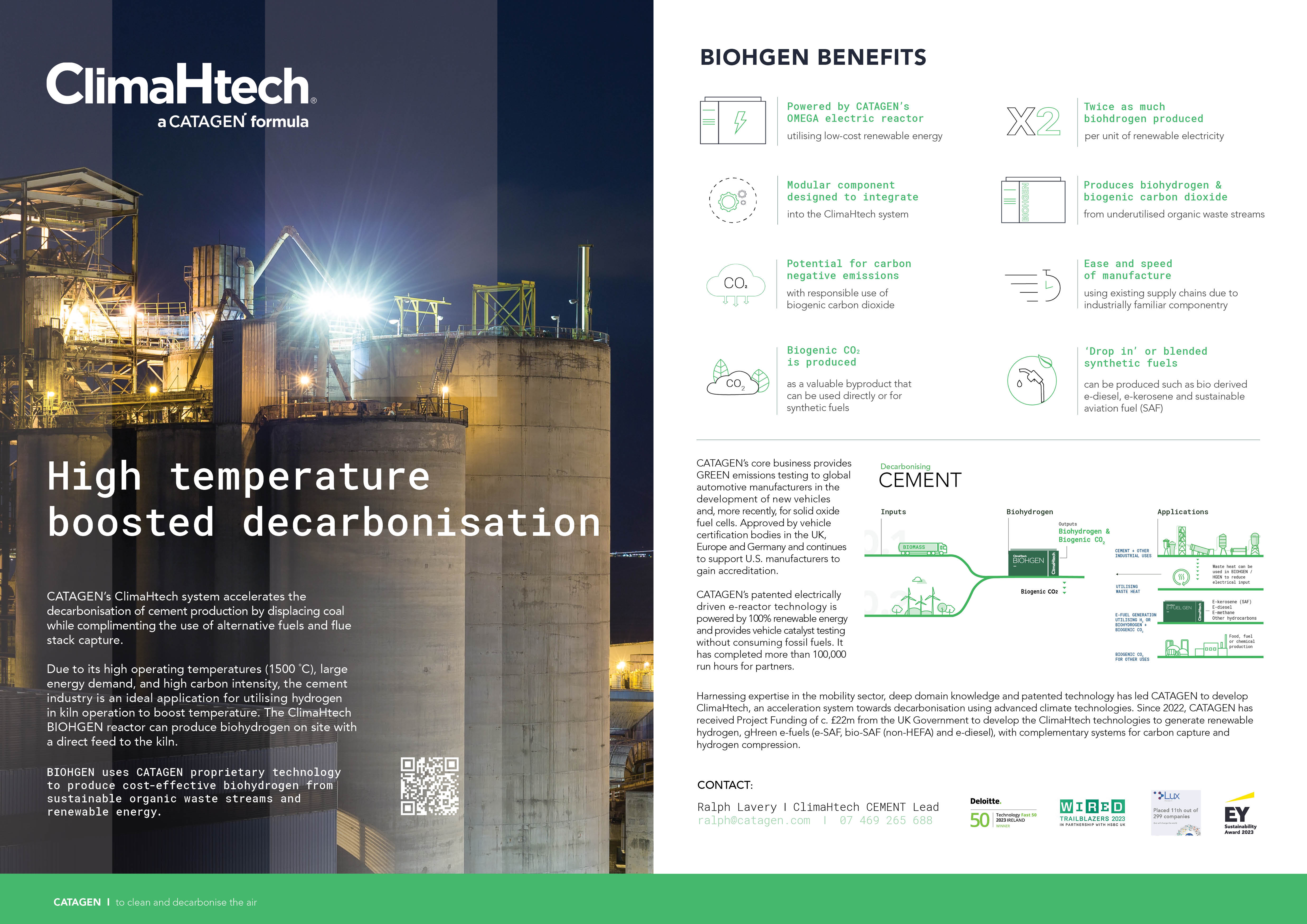
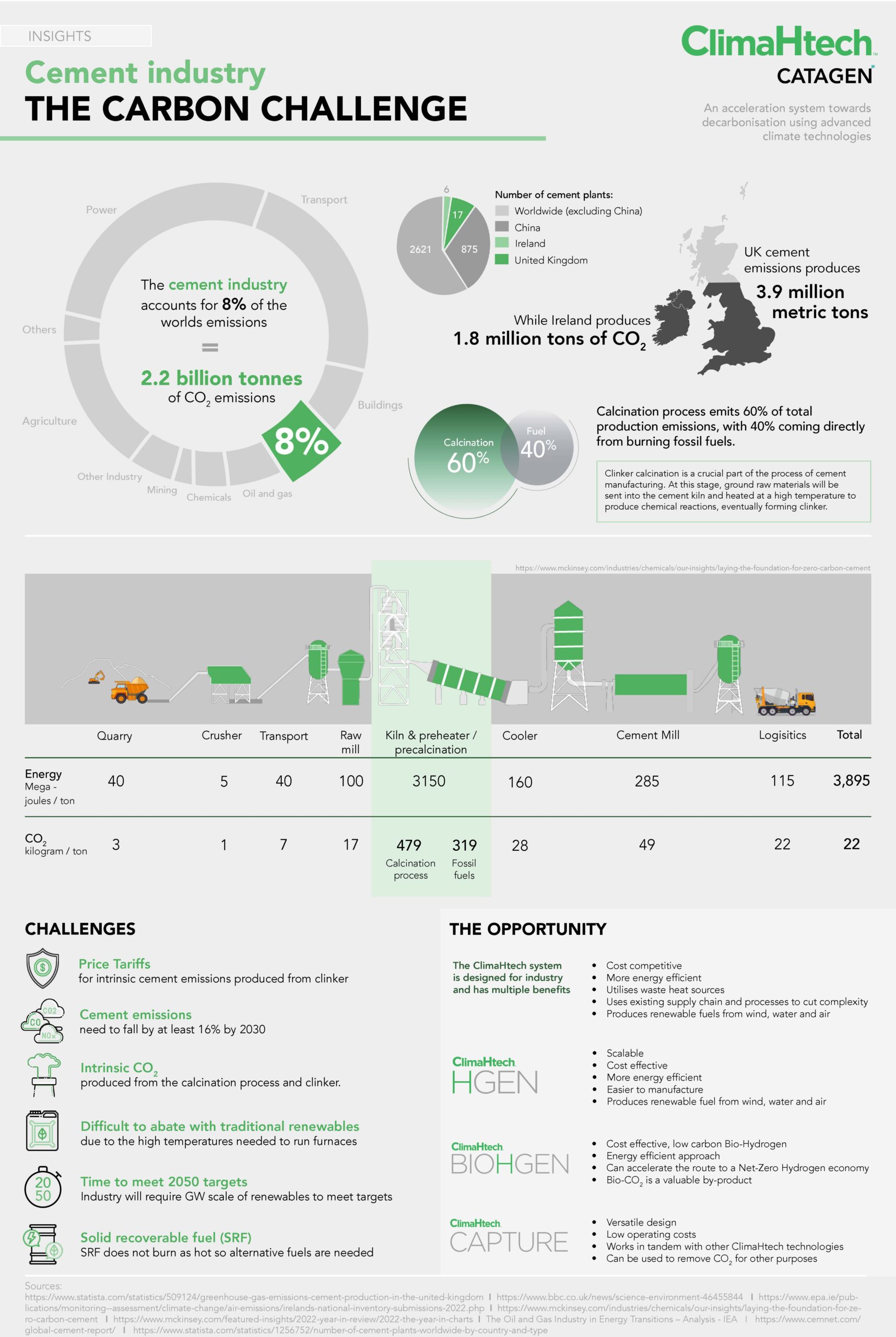
CATAGEN’s ClimaHtech system accelerates the decarbonisation of cement production by displacing coal while complimenting the use of alternative fuels and flue stack capture.
Due to its high operating temperatures (1500 ˚C), large energy demand, and high carbon intensity, the cement industry is an ideal application for utilising hydrogen in kiln operation to boost temperature. The ClimaHtech BIOHGEN reactor can produce biohydrogen on site with a direct feed to the kiln.
BIOHGEN uses CATAGEN proprietary technology to produce cost-effective biohydrogen from sustainable organic waste streams and renewable energy.
View the document below or learn more at ClimaHtech CEMENT – Catagen
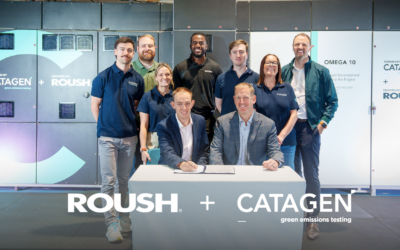
Press Release: Roush Industries and CATAGEN Green Emissions Testing Bring Advanced Catalyst Development to North America
17 September 2026– Belfast Roush Industries and CATAGEN Green Emissions Testing have entered a...
BLOG – How CATAGEN Ensures Marine Engine Compliance
CATAGEN’s DAAAC helps marine engine manufacturers assess aftertreatment durability against the useful-life demands of EPA 40 CFR Part 1042. Using the OMEGA reactor, it recreates key degradation mechanisms under controlled conditions, helping identify durability risks earlier, reduce reliance on lengthy engine-based ageing and build confidence ahead of regulatory testing.
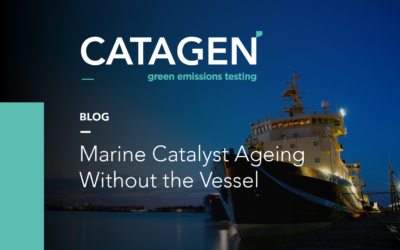
BLOG – From Laboratory to Vessel: De-Risking Marine Catalyst Development
By recreating representative marine operating conditions in a controlled laboratory environment, CATAGEN’s OMEGA reactor enables manufacturers to evaluate, compare and refine catalyst technologies before progressing to costly vessel trials. Its highly repeatable testing helps identify performance issues earlier, reduce development risk and ensure that onboard testing becomes the final stage of validation rather than the starting point.
BLOG – The GENSET Market in 2026: Five Trends Shaping the Industry
Discover the five key trends shaping GENSET development in 2026. Learn how alternative fuels, hybrid power, and strict emissions testing impact catalyst durability.
BLOG – The Future of Durability Testing: Building Confidence for a Decarbonised World
As the energy transition accelerates, confidence in catalyst durability is becoming essential to technology deployment. This final article explores the future of catalyst durability testing and how predictive insight will help unlock the next generation of hydrogen, renewable fuel, and industrial process technologies.

BLOG – People, Expertise, Results: The Team Behind Catalyst Confidence
BLOG SERIES 5of 6 – People, Expertise, Results. the Team behind Catalyst Confidence