








by Daniel McAfee, Solutions Engineer, CATAGEN Green Emissions Testing
Cold start emissions continue to be one of the toughest challenges in modern powertrain and aftertreatment development. As legislative pressure increases and cycle weighting changes tighten limits, the first 60–90 seconds of a drive cycle now play an outsized role in determining whether a vehicle passes or fails.
As CATAGEN’s Group, Chief Scientific Officer, Prof. Roy Douglas, succinctly puts it:
“You can’t pass an emissions test in the first 60 seconds, but you can certainly fail it.”
Why Cold Start Emissions Behave Differently
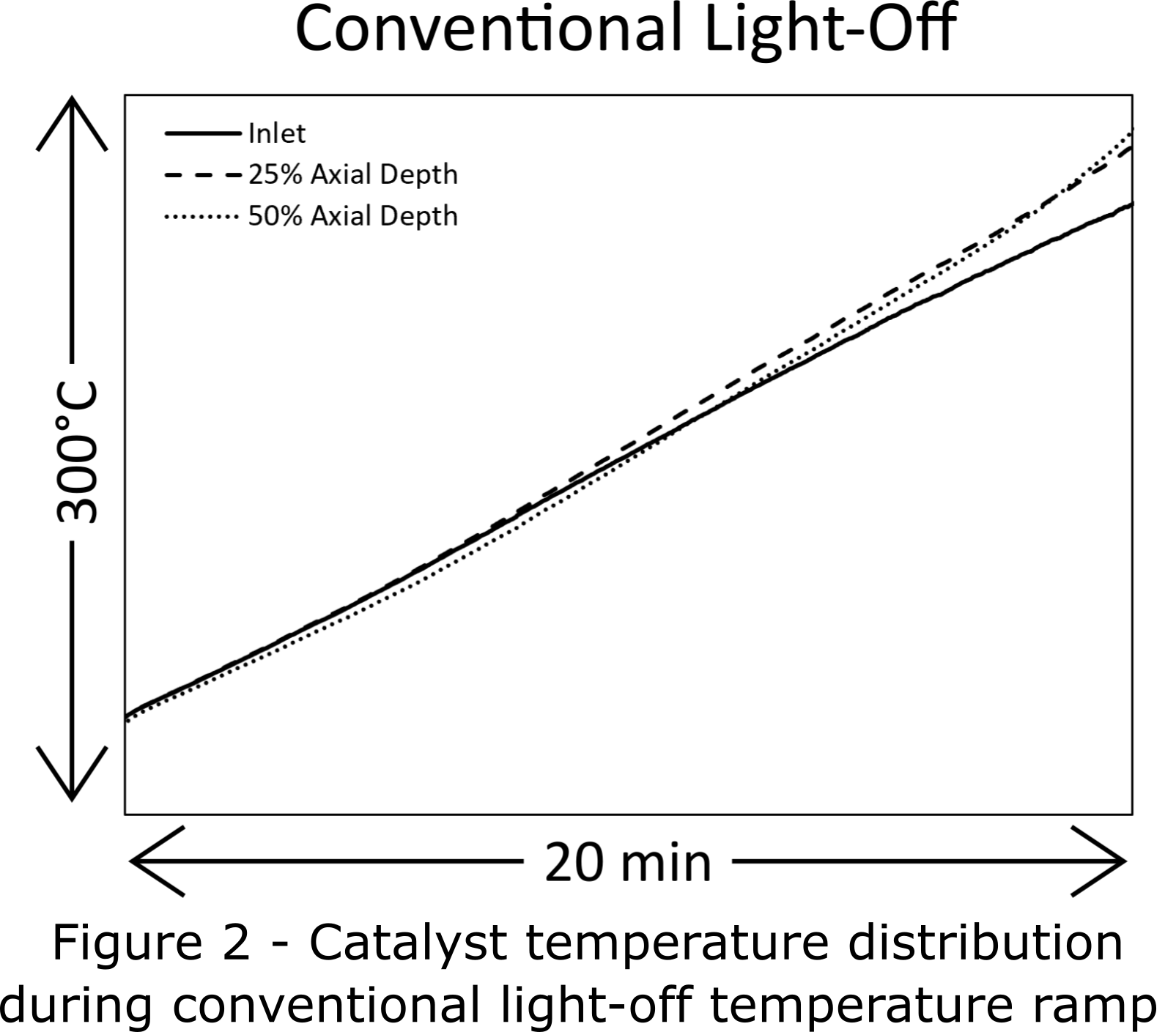
Conventional light-off tests use a slow inlet temperature ramp typically around 15°C/min. This promotes a uniform temperature distribution throughout the catalyst brick, which is ideal for characterising overall activity. However, this behaviour is nothing like what happens during a real vehicle cold start.
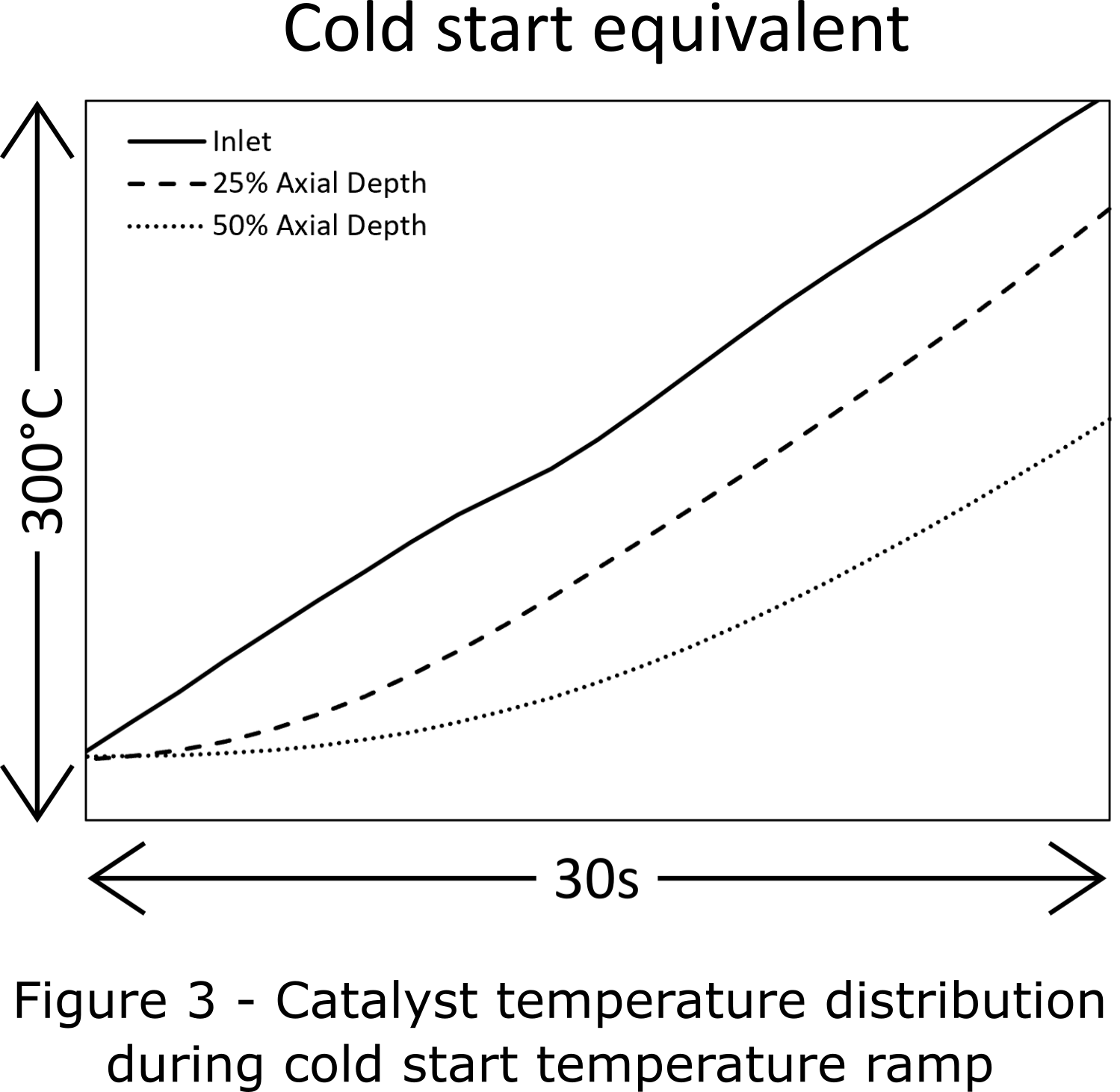
During an actual cold start, the objective is rapid heat-up. The aftertreatment system experiences very steep spatial temperature gradients, often over 100°C across the monolith, driven by thermal inertia. The result is a highly non-uniform activity profile, with the front face playing a disproportionate role in early conversion.
This matters because localised front-face deactivation, common in multi-catalyst systems or high-mileage hardware, can delay light-off and significantly increase tailpipe emissions. Yet these effects are invisible in a slow-ramp light-off test. Two catalysts may show identical global activity but behave very differently when exposed to true cold-start conditions.
Introducing CATAGEN’s Fast Light Off Test
To reveal the behaviours that conventional tests miss, CATAGEN developed the Cold Start Emissions / Fast Light-Off Test. This method reproduces the thermal environment of a real cold start in a controlled, highly repeatable way.
Key characteristics:
- 10°C-15°C/second inlet temperature ramp
- Constant mass flow and exhaust gas composition
- Stable, controlled boundary conditions
- Thermal gradients representative of real engine cold start events
This approach uncovers localised degradation, uneven ageing, and delayed ignition behaviour that would otherwise remain hidden.
Repeatability as a Core USP
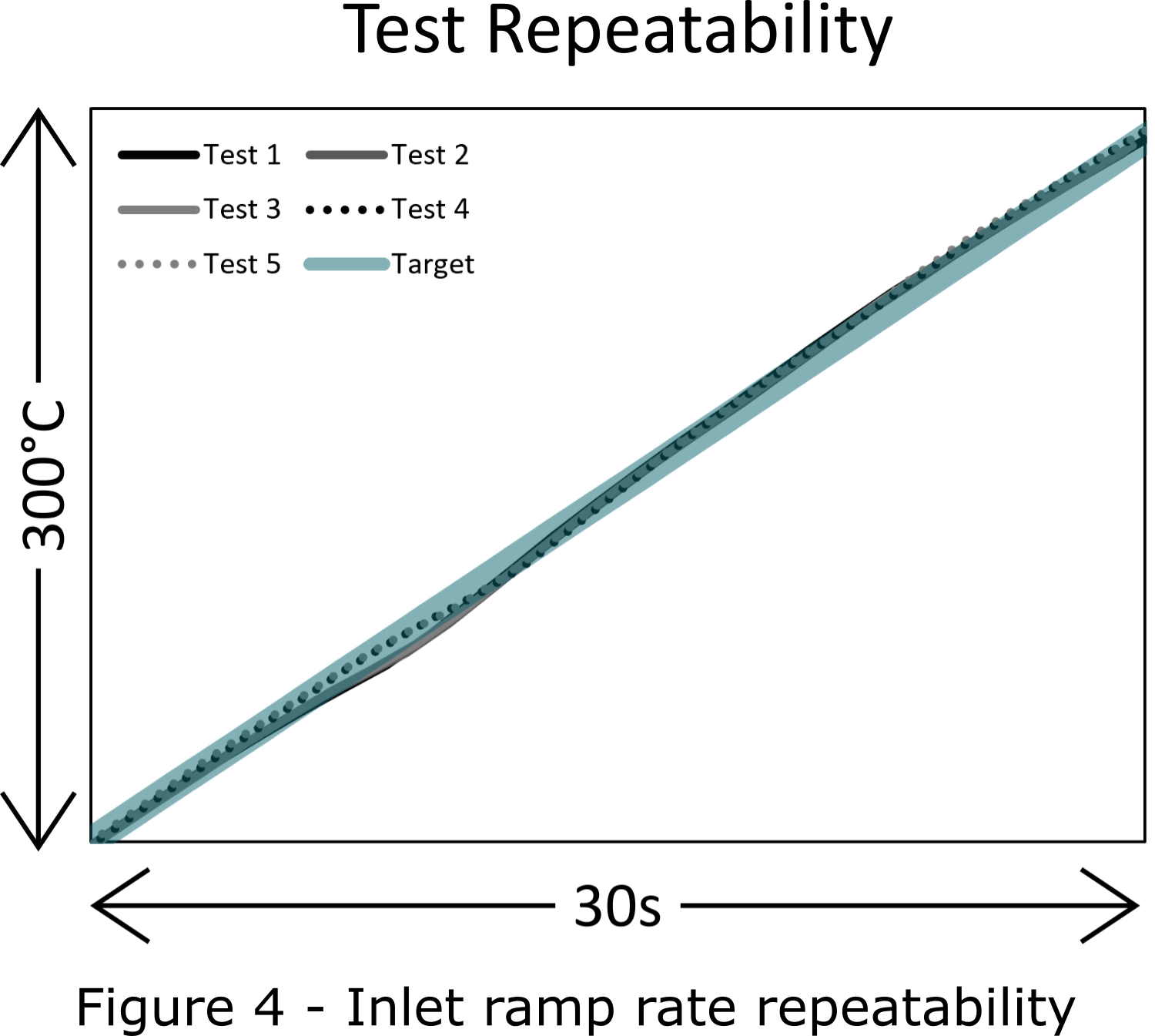
For OEMs, confidence in results is essential. CATAGEN’s system architecture ensures exceptional test-to-test repeatability, tightly aligning each run to the target thermal and flow profiles.
This level of repeatability forms one of CATAGEN’s strongest USPs:
When a performance difference appears in our Fast Light-Off test, you can trust it’s the catalyst, not the test.
Conclusion
Cold start emissions remain a defining challenge in meeting global emissions regulations. CATAGEN’s Fast Light-Off methodology gives engineers a much clearer view of catalyst behaviour during this critical phase, particularly where front-face deactivation threatens compliance.
By combining industry-leading repeatability with realistic cold-start conditions, CATAGEN enables more robust validation of aftertreatment designs, ageing strategies, and golden-sample replication.
Book a 30 min Technical Discovery Call with one of our experts to find out more – https://catagen.com/contact